




 $NBIS
What happened
Nebius Group N.V. (NASDAQ: NBIS) stock rose 167.1% in 2026 through the September 18 close.
The company also changed scale. A five-year Meta Platforms, Inc. (NASDAQ: META) agreement is worth up to about $27 billion, while second-quarter cloud revenue grew more than sixfold.
Those developments support a bigger business, but they do not prove what caused the share gain or whether the current price is fair.
The company completed the sale of its former Yandex businesses in July 2024 and adopted its current name in August. The remaining group then accelerated investment in AI infrastructure.
Explain the financial terms
A fiscal quarter is a three-month period in the company's reporting year.
The move in numbers
The Class A shares closed at $223.54 on September 18, up from $83.705 on December 31. Dividing the later close by the earlier close and subtracting one gives 167.1%.
The calculation uses Yahoo's raw Close field for two completed regular sessions. It excludes reinvested dividends and does not use the September 21 intraday price.
ChartExchange independently reports $83.705 and $223.54 for the same dates. Yahoo returned no split event, and both observations use the same Nasdaq Class A security and U.S. dollar basis.
A 167% move raises the evidence bar. The business now has to deliver enough revenue and cash economics to support expectations that were much lower at the prior year-end.
What the company sells
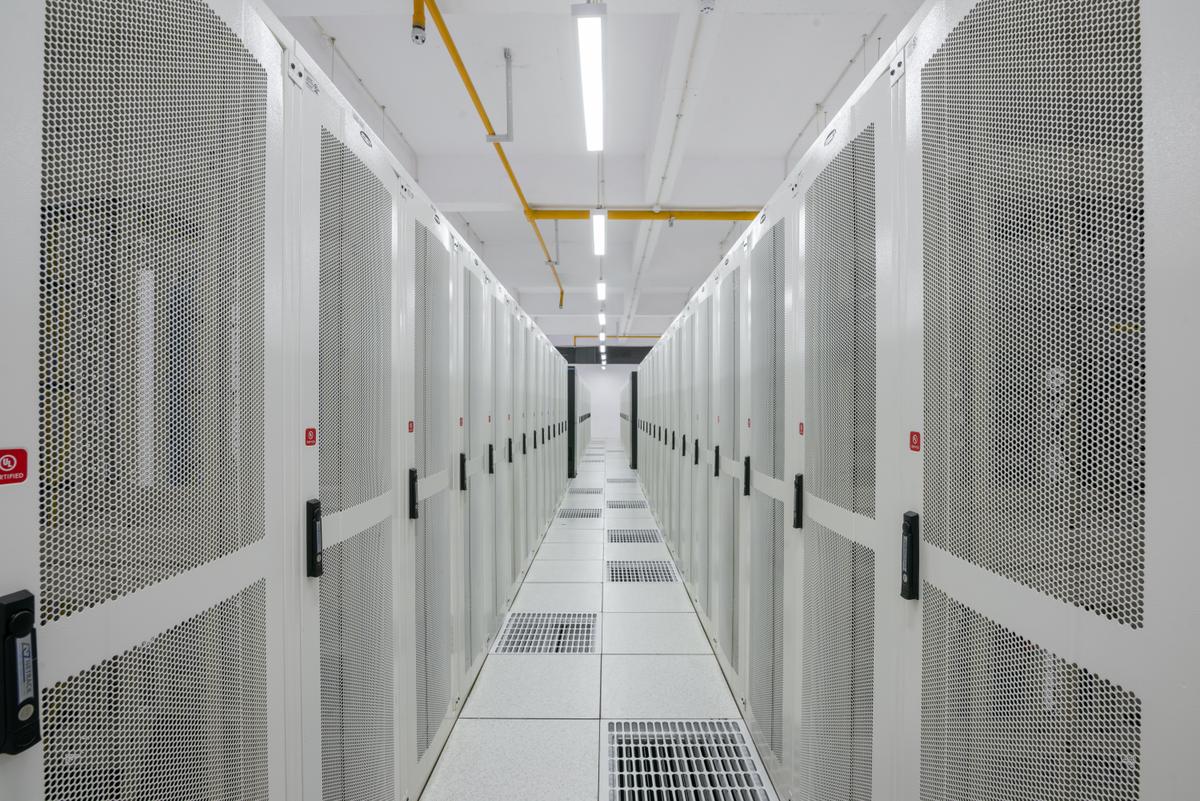
Nebius Group N.V. (NASDAQ: NBIS) runs an AI cloud. Customers rent GPU compute, storage and networking, then use managed software to train models, run inference and operate applications.
Customers can pay as they go or reserve capacity under fixed contracts. That mix lets startups buy smaller workloads while large technology customers commit to clusters before every machine is installed.
The company designs hardware and software together, manages the network and data layer, and supports workloads from model training through production inference.
That integration is the differentiation claim. It must produce better utilization, performance or service than customers can get from bare hardware, or the business risks competing mostly on GPU price.
The group also owns Avride and TripleTen plus stakes in ClickHouse and Toloka. The cloud already dominates the operating story. It produced 98.7% of second-quarter group revenue.
Explain the financial terms
A fiscal quarter is a three-month period in the company's reporting year.
How 2026 changed the case
The March agreement with Meta Platforms, Inc. (NASDAQ: META) is the clearest demand proof. Dedicated clusters account for $12 billion, with deployments starting in tranches in early 2027.
Another order covers up to $15 billion of capacity that the company first intends to sell to third parties. Meta Platforms, Inc. (NASDAQ: META) must buy qualifying capacity that remains unsold under the contract terms.
That distinction matters. The headline amount is not current revenue, and the conditional portion is not the same as a guaranteed evenly spread purchase.
Reported results still moved quickly. Second-quarter total revenue reached $582.3 million, up 454%. AI cloud revenue reached $574.9 million, up 514%.
Cloud adjusted EBITDA was $285.7 million, while cost of revenue fell to 23% of sales from 29%. Those figures show stronger unit economics as capacity filled.
GAAP results keep the countercase alive. The group reported a $175.9 million operating loss, and quarterly interest expense rose to $119.1 million from $4.8 million.
Explain the financial terms
A fiscal quarter is a three-month period in the company's reporting year.
The market and competition
Gartner, Inc. (NYSE: IT) forecasts $42.3 billion of worldwide AI-optimized infrastructure-as-a-service spending in 2026 and $66.1 billion in 2027. It expects inference to represent $23.3 billion of the 2026 total.
That is a broad spending forecast, not revenue available to one provider. It includes customers, geographies and workloads the company may never reach.
The annual filing names CoreWeave, Inc. (NASDAQ: CRWV), Crusoe and Lambda as specialized rivals. It also names Amazon Web Services, Google Cloud, Microsoft Azure and Oracle Cloud as general-purpose competitors.
The specialized providers can focus on GPU performance. The larger cloud platforms bring deeper balance sheets, global distribution and software bundles. The company's full-stack platform has to justify a place between them.
A July partnership model shifts some financing and hardware ownership to infrastructure partners. The company supplies architecture, software, services and customers, but revenue-sharing and licensing economics remain prospective and undisclosed.
The capital bill
Growth has required far more cash than current revenue. First-half property, equipment and intangible purchases were $8.13 billion against $981.3 million of revenue, a ratio of about 8.3 times.
This ratio compares cash investment with income-statement revenue over the same six months. It is not a margin, and part of the infrastructure will support later periods.
First-half operating cash flow was $4.50 billion. A $4.40 billion increase in deferred revenue from customer advances explains most of that inflow, so it should not be read as ordinary free cash generation.
The June 30 cash balance was $8.04 billion. During the first half, financing included $4.34 billion of convertible-note proceeds, $2.85 billion from treasury-share sales and $2 billion from a pre-funded warrant.
The company then closed another $5.75 billion convertible-note offering in August. It also exchanged $800 million of older notes for about 15.8 million Class A shares.
Capital is buying capacity while contracts provide demand visibility. The risk is that fixed financing, depreciation and delivery obligations arrive before that capacity earns enough revenue.
The asset-light model could reduce the next dollar of capital needed. Investors still need reported partner economics before treating it as a proven answer to the balance-sheet burden.
What's next
The next quarterly report should show revenue, cloud adjusted EBITDA, operating loss, capital spending and customer advances together. One strong metric cannot answer the case by itself.
Capacity delivery is the operating test. New sites must connect on schedule, hold utilization and service levels, and convert reserved demand into recognized revenue.
The Meta Platforms, Inc. (NASDAQ: META) deployments beginning in early 2027 are the largest visible milestone. Timely delivery would strengthen the contract-backed growth case. Delays, discounts or slower third-party demand would weaken it.
This article cannot assign the 167.1% gain to specific events or calculate intrinsic value. It also cannot treat contract value, customer prepayments or a market forecast as earned revenue.