

 $VRT
What happened
Shares of Vertiv Holdings Co (NYSE: VRT) closed at $248.78 on September 23, up 53.6% from the December 31, 2025 close.
That gain matters because the business is delivering more than an AI label. Sales, adjusted operating margin and cash flow all expanded in the first half while management raised its 2026 guidance.
The price move also raises the burden of proof. Investors now need evidence that a record order book can become profitable revenue without supply, capacity or customer-timing problems.
The dated operating results strengthen the investment case, but they cannot prove what caused every part of the share gain. Market expectations and valuation also matter, and neither is isolated by the filings.
Explain the financial terms
A profit margin expresses the specified profit measure as a share of sales.
Guidance is management's forecast, not a completed result.
The move in numbers
Dividing the September 23 close by the December 31 close and subtracting one gives a 53.6% increase. The calculation uses raw closes for the same Class A common stock and excludes dividends.
Nasdaq reports the same endpoints at $162.01 and $248.78. That matches Yahoo to the displayed cent and removes a material data-provider disagreement.
Yahoo returned no split event during the period. The September 24 session was still open when this article was prepared, so the September 23 close is the latest completed regular session.
The stronger operating comparison is backlog. It rose from $7.2 billion at the end of 2024 to $15.0 billion at the end of 2025, an increase of 108.3%.
That backlog equaled 1.47 times 2025 revenue of $10.23 billion. It shows how much work had been ordered, but customers can still cancel, reduce or defer some orders.
How the business works
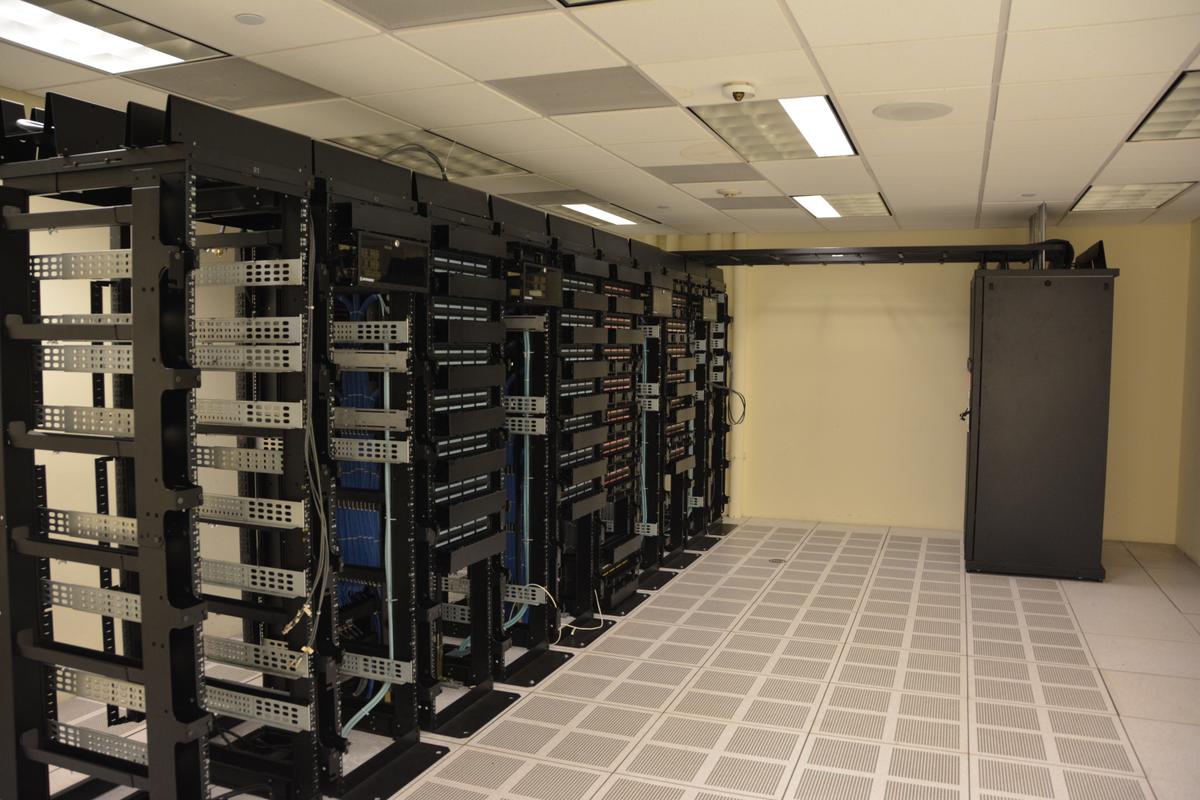
Vertiv Holdings Co (NYSE: VRT) sells the physical infrastructure that keeps data centers and other digital facilities running. Its portfolio includes power management, switchgear, battery systems, racks, air and liquid cooling, monitoring software and lifecycle services.
The product sale is only part of the advantage. The company operates more than 300 service centers and deploys about 5,000 service engineers. Customers pay for uptime, installation speed and support when a failure can interrupt expensive computing capacity.
Eaton Corporation plc (NYSE: ETN) competes as a broad global electrical supplier. Johnson Controls International plc (NYSE: JCI) competes in targeted cooling and building infrastructure. Both can pressure price, capacity and customer relationships.
The addressable need is growing, but it is not unlimited. The International Energy Agency projects data-center electricity use to rise from 485 terawatt-hours in 2025 to 950 terawatt-hours in 2030, while warning that grid, equipment and financing bottlenecks can slow projects.
Higher rack density is the direct business link. The International Energy Agency says an advanced rack could draw as much peak power as 65 households by 2027. More power creates more heat, making electrical delivery and thermal management harder to treat as commodity add-ons.
What changed in 2026
The April quarter showed that orders were converting. First-quarter sales rose 30% to $2.65 billion, including 23% organic growth. Adjusted operating margin reached 20.8%, up 430 basis points, while operating cash flow was $767 million.
Management raised full-year guidance after that result. The sales range moved to $13.5 billion to $14.0 billion, with 29% to 31% expected organic growth.
The July quarter extended the pattern. Sales rose 24% to $3.27 billion, including 18% organic growth, 5% from acquisitions and 1% from currency. Adjusted operating margin reached 22.6%, up 410 basis points.
Second-quarter operating cash flow was $1.10 billion and adjusted free cash flow was $925 million. The adjusted figure equaled 84% of operating cash flow after capital spending and capitalized software.
Management then raised the full-year sales midpoint to $14.0 billion and the organic growth midpoint to 31%. The company also ended June with a net cash position, which gives it more room to expand capacity.
Explain the financial terms
A fiscal quarter is a three-month period in the company's reporting year.
A profit margin expresses the specified profit measure as a share of sales.
Guidance is management's forecast, not a completed result.
The risks
The strongest counterargument is that the market may already assume years of flawless AI infrastructure growth. A healthy business can still disappoint when the stock price embeds faster delivery, higher margins or more durable demand.
Backlog is not guaranteed revenue. The annual filing says customers can cancel, reduce or defer orders in some circumstances. Data-center projects can also be delayed by power availability, permitting, financing or weaker expected returns.
Execution risk is visible in the June quarter. Management cited temporary supply-chain congestion and timing shifts in larger, multi-phase deployments. Inventory reached $2.52 billion at June 30, up from $1.46 billion at year-end, as the company prepared for growth.
That inventory may support deliveries, but it also puts more cash at risk if schedules move. Competition can intensify as electrical and cooling suppliers add capacity, and standardized systems could reduce pricing power.
Adjusted metrics also need care. They help compare operations, but they exclude items that still affect shareholders. GAAP operating profit, working capital and capital spending should confirm the same direction.
Explain the financial terms
A fiscal quarter is a three-month period in the company's reporting year.
What's next
The OptimistFi event calendar projects the next earnings report for November 4 from the company’s filing cadence. That date is estimated rather than confirmed.
The key test is the third-quarter guide: $3.65 billion to $3.85 billion of sales and a 24% to 25% adjusted operating margin. Hitting both would show that volume and execution are improving together.
Watch operating cash flow, inventory, deferred revenue and commentary on project timing. The case strengthens if backlog converts while margins and cash stay strong. It weakens if delays, cancellations or working-capital needs grow faster than deliveries.
The year-to-date timeline explains why the business case looks stronger. It does not show that these disclosures caused the full share gain, establish a fair value or provide personalized investment advice.
Explain the financial terms
A fiscal quarter is a three-month period in the company's reporting year.
A profit margin expresses the specified profit measure as a share of sales.