



Nine Democratic senators challenge CFTC push for nationwide prediction-market access
Exchanges reportedly have until December 5 to remove state access blocks or defend them. The dispute reaches Kalshi, Polymarket and three mainstream brokers.
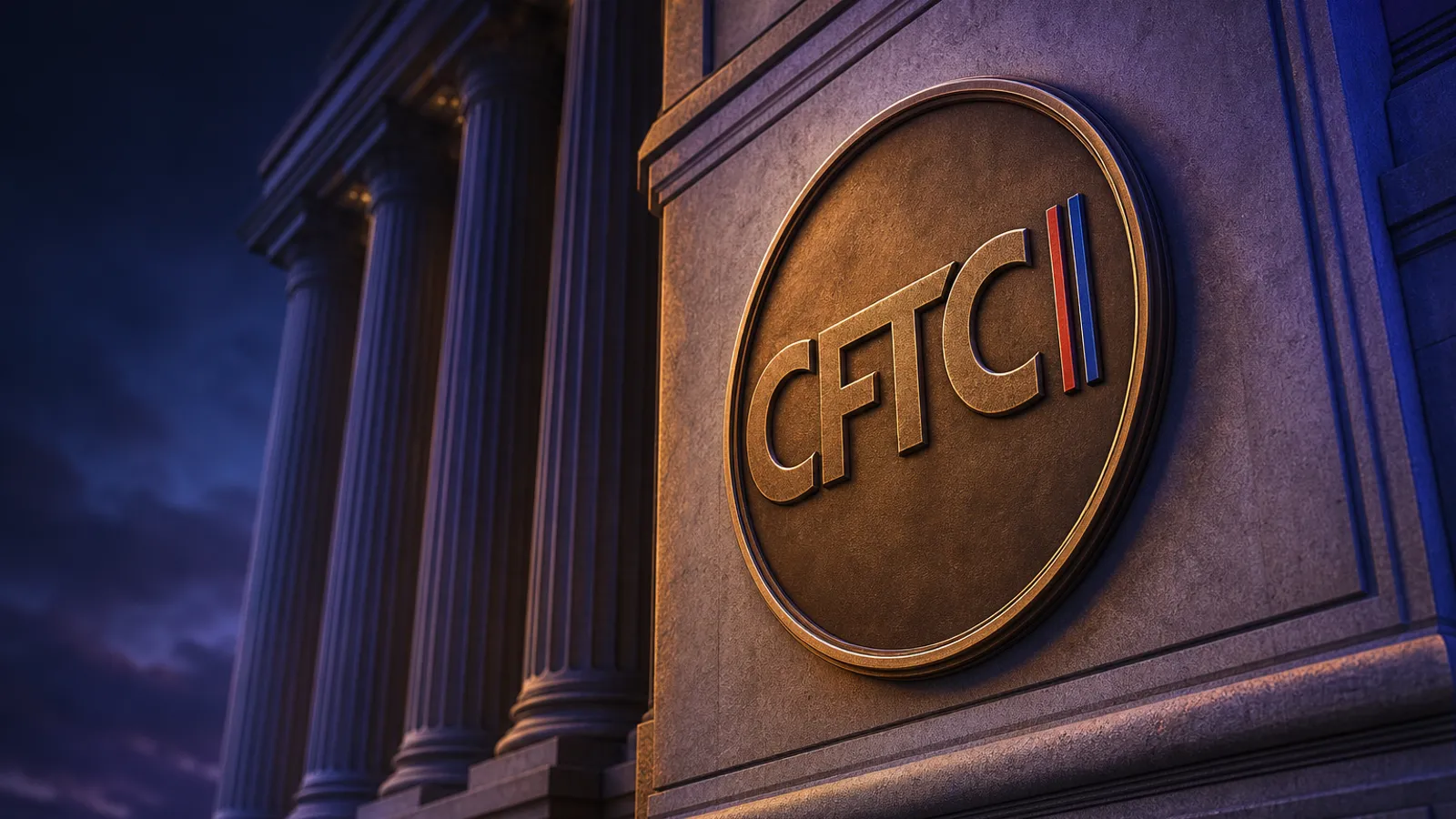

Nine Democratic senators challenged a CFTC push that reportedly gives federal exchanges 30 days to remove state access blocks or defend them. The fight could change which event contracts, which pay according to whether a specified outcome occurs, traders can access in each state.
Crypto Briefing reported that the Commodity Futures Trading Commission, the federal derivatives regulator, issued the guidance on November 5. A state access block, or geofence, stops a trade based on where the exchange locates the user.
| Measure | Figure | Why it matters |
|---|---|---|
| Exchange compliance window | 30 days; December 5 by calculation from Crypto Briefing's report | Exchanges must remove state blocks or justify them |
| Senators signing the letter | 9 | They want the CFTC to pull back |
| States sued by the CFTC | Arkansas was the 11th | The agency claims sole federal authority |
| Federal event-contract market | At least 8 exchanges and more than 3,000 contracts | The dispute reaches a broad market |
| Mainstream brokers named | Robinhood, Coinbase and Webull | They offer contracts through exchange partners |
| Kentucky tax challenged by the CFTC | 14.25% of fees and contract notional value | It covers trades tied to Kentucky |
Accounts of the senators' request differ. Crypto Briefing described a call to halt or reverse the guidance. Seeking Alpha and CoinGape described a broader demand to stop challenging state restrictions.
Why it matters
Federal exchange status may not settle whether a contract is available in a particular state. If the guidance stands, each exchange must open access or persuade the CFTC that its state block should remain.
The CFTC says state limits clash with the goal of one national derivatives market. The nine senators want the agency to leave room for states to restrict the same federally regulated contracts.
That puts access, rather than the price of a position, at the center of the dispute. A trader may see a contract listed on a federal exchange but still face a state block as the court fights continue.
Federal exchanges meet state restrictions
Kentucky filed actions on June 17 against the firms behind Kalshi, Polymarket, RobinhoodHOOD$72.58-2.80%, CoinbaseCOIN$119.95+0.82% and Webull. The state said their sports contracts broke its gambling and consumer rules.


The CFTC sued Kentucky six days later to stop those laws from reaching event contracts on federal exchanges. At least eight regulated exchanges had self-certified more than 3,000 such contracts by then.
Kentucky also adopted a 14.25% tax on transaction fees and each affected contract's notional value, or stated exposure. It applies to trades made in Kentucky or by a Kentucky resident.
The agency widened the fight on November 13 by suing Arkansas. Arkansas became the 11th state the CFTC had sued in defense of federal interests.
The CFTC has also filed briefs in four federal appeals courts and one state supreme court. Chairman Michael Selig said it would "continue to defend its sole jurisdiction" over federally regulated markets.
The Arkansas case seeks to block state civil penalties that could reach hundreds of millions of dollars. Arkansas is trying to halt event-contract trading on Kalshi, according to the CFTC.
How mainstream brokers are involved
Kalshi and Polymarket US are designated contract markets, exchanges overseen by the CFTC for derivatives trading. Robinhood, Coinbase and Webull are registered futures brokers offering event contracts through exchange partnerships.
That brings the state dispute into brokerage accounts as well as prediction-market platforms. Kentucky's actions named all five firms, while the CFTC says federal law governs contracts traded on registered exchanges.
The dispute could next move from court to Congress. The senators called for hearings and possible new laws, while Democrats are set to hold both chambers in 2027.
What's next
The reported compliance period for exchanges ends December 5. By then, exchanges must reportedly remove state blocks or justify them unless the CFTC pauses or reverses the guidance.